Morning briefing
Weekdays, 7:45Summarises the day on one page: appointments, meeting notes, new documents and open points. Read with the first coffee.Guardrail: read only. No replies, no appointments, no changes.

Insights · AI in practice
AI first means: routine work is done by agents that run at fixed times. They read, research and summarise. Deciding, sending and publishing is up to us.
By Michele Mangieri · Updated
In short
AI in practice at maxClaint means that routine work is done by AI agents that run at fixed times. Four examples are a morning briefing, a skill radar, a LinkedIn radar and a weekly review. The agents read, research and summarise. Guardrails in their instructions rule out sending, deleting and publishing. In the end, a person decides.
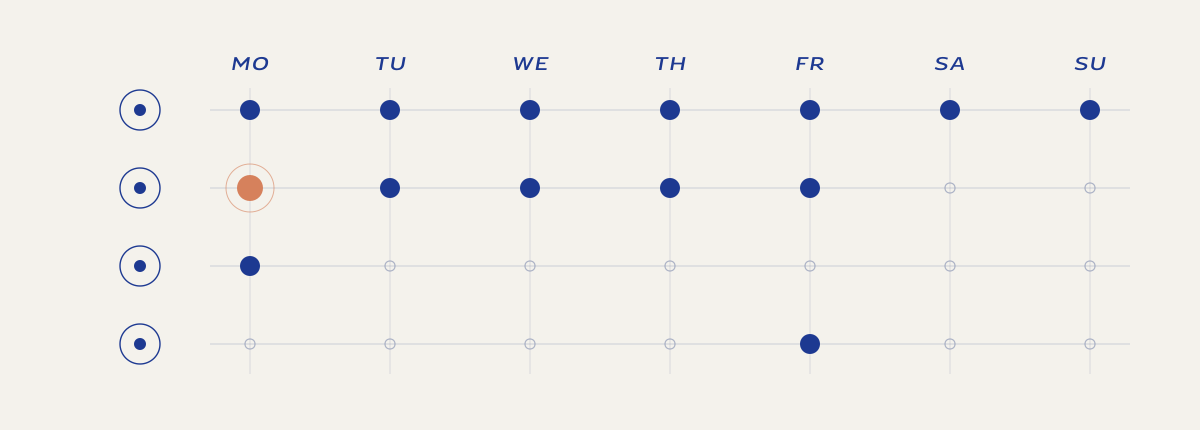
Four examples
Weekdays, 7:45Summarises the day on one page: appointments, meeting notes, new documents and open points. Read with the first coffee.Guardrail: read only. No replies, no appointments, no changes.
Daily, 6:49Tracks new Claude Code skills and agent tools in our fields, rates them by relevance, maturity and risk and shows the top three per category. A test list remembers what we are trying out.Guardrail: installs nothing and runs no third-party code. Tools with write access to business systems are flagged red.
MondaysReviews last week’s news on SAP, enterprise AI, enterprise architecture and from Gartner and MIT, and proposes three post ideas with drafts in German and English.Guardrail: posts nothing. Every figure has a source, open points are marked, publishing is done by hand.
Fridays, 15:44Turns the week’s calendar, meetings, emails and documents into a status update: results, decisions, open points and outlook.Guardrail: only evidenced points with their source. Confidential details stay out.
What we have learned
What sets agents apart from chatbots is covered in Agentic AI. The fundamentals teams need are covered in AI literacy.
Wondering where agents could take routine work off your team? AI Decision Readiness →
Frequently asked questions
Routine work such as reading, researching and summarising. At maxClaint, one agent summarises each weekday on one page, one tracks new Claude Code skills, one proposes LinkedIn post ideas and one turns the week into a status update on Fridays.
Limits that belong in the agent's instructions: agents read and write drafts, but they do not send, delete or publish. The morning briefing, for example, is read only, and the skill radar installs nothing and runs no third-party code.
No. Sources are data, not instructions. Whatever is written in an email or on a web page must not steer the agent. In addition, agents do not send, delete or publish; in the end, a person decides.
Through lists that are carried over from the last run. One example is the skill radar's test list, which remembers what is being tried out. Another is a topic backlog.
You describe the decision ahead. We tell you which package fits, or that none does.